Anxiety Treatment in Cedar Park and greater Austin
Some degree of worry is normal — and often helpful. It can motivate preparation and sharpen awareness. However, when worry becomes persistent, excessive, or begins to interfere with work, relationships, sleep, or daily functioning, it may signal an anxiety disorder.
Evidence-based care is available for ongoing worry, physical anxiety symptoms, panic, and stress that is disrupting daily life.
Common Symptoms
Anxiety can show up mentally, physically, and behaviorally. You may notice:
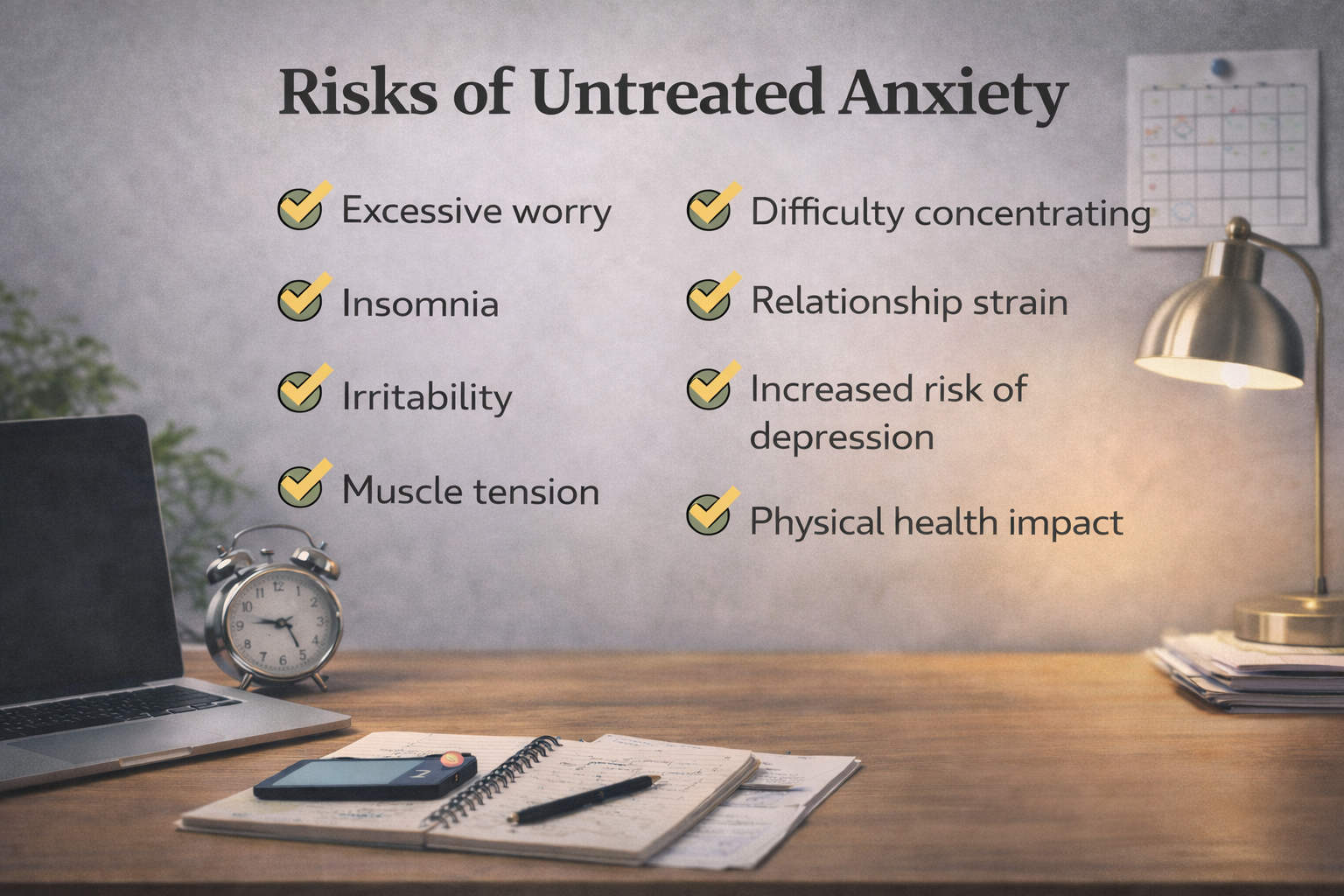
• Excessive worry that feels difficult to control
• Restlessness or feeling “on edge”
• Difficulty concentrating or mind going blank
• Irritability
• Muscle tension
• Sleep disturbance (trouble falling or staying asleep)
In some cases, anxiety can also include panic attacks, avoidance, or a constant sense of dread.
How Anxiety Is Evaluated
A helpful evaluation focuses on clarity — not just labeling.
Assessment typically includes:
• Detailed clinical history and current symptom pattern
• Review of triggers, avoidance patterns, and functional impairment
• Screening for depression, trauma, ADHD, sleep problems, and substance use
• Review of medical contributors when relevant (thyroid, medications, caffeine, etc.)
The goal is to identify what type of anxiety is present and what is maintaining it.
Treatment Options
Treatment is individualized and may include:
Psychotherapy / Skills-Based Treatment
Cognitive Behavioral Therapy (CBT), Acceptance Commitment Therapy (ACT), exposure-based approaches, and practical coping strategies to reduce avoidance and improve resilience.
Medication Options (when appropriate)
Medication may be considered based on severity, symptom pattern, and past response, with careful attention to benefits, side effects, and long-term plan.
Lifestyle and Systems Support
Sleep, regular physical activity, and stress physiology optimization can meaningfully reduce baseline anxiety. Strengthening supportive relationships and maintaining meaningful social connections are also central to resilience. Isolation often amplifies anxiety, while consistent connection and structure help regulate mood and stress responses over time.
TMS Therapy
For patients whose anxiety occurs alongside treatment-resistant depression — or when medication alone has not provided sufficient relief — Transcranial Magnetic Stimulation (TMS) may be worth considering. TMS is FDA-cleared for major depressive disorder, OCD, and anxious depression, and uses targeted magnetic pulses to stimulate the brain circuits involved in mood regulation. It is non-invasive, requires no anesthesia, and is delivered entirely in-office.
My Approach
Anxiety rarely exists in isolation. It often reflects a broader narrative — patterns shaped by personality traits, high standards, family-of-origin dynamics, past experiences, and long-standing coping strategies.
A careful evaluation includes understanding what is driving the anxiety, not just labeling symptoms. This may involve exploring early relational patterns, performance pressures, perfectionism, or chronic stress that has gradually become internalized.
High-functioning individuals, in particular, may not immediately recognize that what they are experiencing is anxiety. Symptoms can present as irritability, overcontrol, burnout, or relentless self-criticism rather than obvious fear.
I use structured, practical frameworks to help patients identify and organize these patterns. Treatment emphasizes insight, skill-building, and strengthening resilience. Medication is considered conservatively and thoughtfully when appropriate, with clear attention to risks, benefits, and long-term goals.
It is also important to recognize that the goal is not the complete elimination of all anxiety. Some degree of anxiety is part of being human. The focus is on improving function, increasing flexibility, and building the capacity to coexist with manageable symptoms while reducing unnecessary suffering.
Resilience — not symptom perfection — is the long-term aim.
Anxiety Treatment Frequently Asked Questions
Do you treat panic attacks?
Yes. Panic attacks are highly treatable. Evidence-based therapy — particularly cognitive-behavioral and exposure-based approaches — is often very effective. Medication may also be considered when appropriate. Treatment is individualized and focused on reducing both panic symptoms and avoidance patterns.
Do you provide therapy, medication management, or both?
Austin Mind and Wellnesss can provide both medication management and therapy concurrently if desired. If preferred, split treatment — coordinating medication management here while receiving therapy elsewhere — is also supported.
Do you accept insurance?
Austin Mind & Wellness is network with BCBS PPO plans and most Aetna plans. We do NOT take other commercial plans like Cigna, United, Oscar Health, Ambetter or Sendero.
How long is the initial evaluation?
Every initial evaluation is scheduled for 90 minutes. Average evaluations in other clinics may be shorter (e.g. 30min - 1hr), but quick visits can often miss other key aspects of treating someone’s overall mental health.
How quickly should I expect improvement?
Response timelines vary depending on symptom severity, duration, and the treatment approach used. Some medications may provide noticeable relief within 1-2 weeks. For more persistent or longstanding anxiety, meaningful improvement in functioning typically becomes evident over the course of 1–3 months of consistent treatment.
Progress is monitored and adjustments are made thoughtfully to support steady, sustainable improvement.