TMS therapy: mental health care for depression without medication
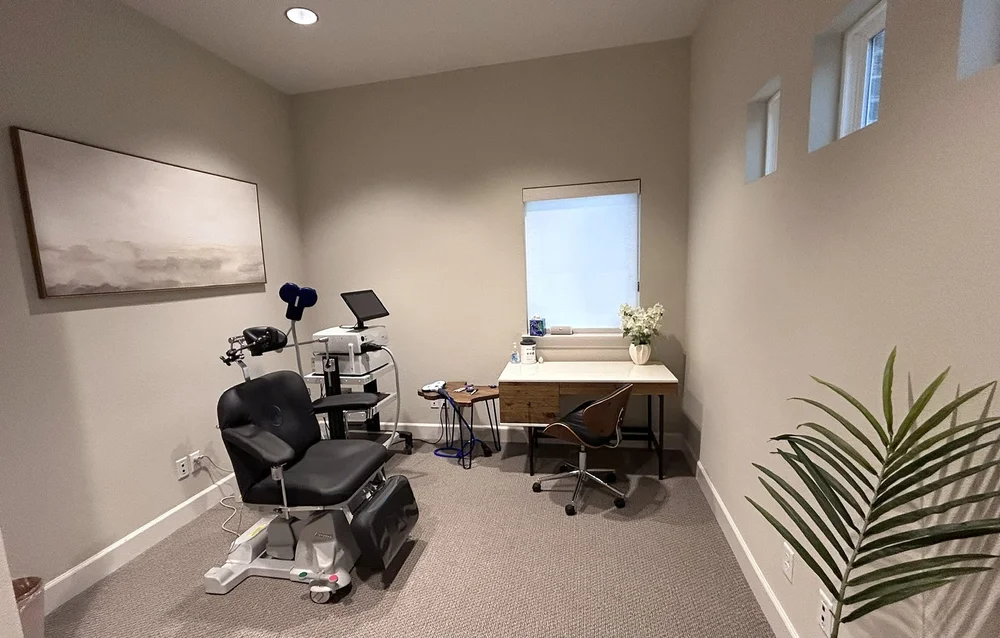
Transcranial magnetic stimulation (TMS) is a non-invasive, FDA-cleared treatment for depression, done in the Cedar Park office. Here is what to expect before you start.
What to weigh
Benefits
- Non-invasive: no surgery, no anesthesia
- No weight gain, sexual side effects, or memory loss
- No disruption to your daily routine
- Can be combined with medication or therapy
- Covered by some plans; the practice is in network only with Blue Cross Blue Shield and Aetna
Risks and side effects
- Scalp discomfort or headache in early sessions, usually mild
- Jaw tension or facial muscle twitching during stimulation
- Mild fatigue after treatment
- Rare seizure risk, approximately 1 in 30,000 sessions
- Not appropriate with certain metal implants near the head
35
sessions in a standard course
About 6
weeks, Monday through Friday
2008
FDA-cleared for depression
16,000+
published studies to date
How TMS works
In depression, a region of the brain called the dorsolateral prefrontal cortex tends to be underactive. TMS sends focused magnetic pulses to that area, gradually restoring more typical activity.
The effect builds slowly over weeks, much like physical therapy. Most people begin noticing changes around weeks three to four.
A session at a glance
- You sit in a reclined chair
- A small coil rests against your scalp
- You feel gentle tapping and hear clicking
- Each session takes under 30 minutes
- No sedation, so you can drive yourself home
An overview of TMS
General overview video from Magstim, the maker of the TMS device. For information only.
Who TMS may be right for
Depression that has not fully lifted
You have a diagnosis of major depressive disorder and have tried one or more antidepressants without enough benefit, or could not tolerate the side effects.
A non-medication option
You want a treatment that does not involve systemic medication. TMS does not cause weight gain, sexual side effects, or memory loss.
Anxious depression
TMS is also FDA-cleared for anxious depression. We will talk through whether it fits your history.
The full course of treatment
TMS questions, answered
What is TMS?
Transcranial magnetic stimulation (TMS) is a non-invasive brain stimulation treatment for depression. It uses gentle magnetic pulses, similar in strength to those used in an MRI, to stimulate areas of the brain involved in mood regulation. There is no surgery, no anesthesia, and no electricity passing through the body. You stay awake and alert for the whole session.
How does TMS work?
In depression, a region of the brain called the dorsolateral prefrontal cortex tends to be underactive. TMS delivers focused magnetic pulses to this area, gradually restoring more typical activity over the course of treatment. The effect builds slowly, like physical therapy strengthens a muscle over weeks. Most people begin noticing changes around weeks three to four.
What does a TMS session feel like?
You sit in a reclined chair while a small coil rests against your scalp. You feel a rhythmic tapping at the coil and hear a clicking sound. Some people notice mild scalp discomfort or jaw tension, mostly in early sessions. Each session takes under 30 minutes. You can listen to music or just rest. No sedation is needed, and you can drive yourself home afterward.
What is the full course of treatment?
A standard course is daily sessions, Monday through Friday, for about six weeks, roughly 35 sessions in all. Response builds gradually, and some people keep improving for several weeks after the last session.
Who is TMS for?
TMS may fit if you have been diagnosed with major depressive disorder, have tried one or more antidepressants without enough benefit or could not tolerate the side effects, or want an option that does not involve systemic medication. TMS is also FDA-cleared for anxious depression. We will talk with you about whether it makes sense for your history.
Does TMS cause weight gain, sexual side effects, or memory loss?
No. TMS does not cause these effects. It also does not disrupt your day, so many people keep working through treatment. It can be combined with medication or therapy.
What are the risks and side effects?
Common effects are scalp discomfort or headache in early sessions (usually mild), jaw tension or facial muscle twitching during stimulation, and mild fatigue after treatment. Seizure is rare, approximately 1 in 30,000 sessions. TMS is not appropriate for certain metal implants near the head, which is part of why an evaluation comes first.
Is TMS the same as ECT?
No. ECT uses electrical current and requires general anesthesia. TMS uses magnetic pulses, needs no anesthesia, and has a very different side effect profile.
Is TMS experimental?
No. TMS has been FDA-cleared for depression since 2008 and is supported by more than 16,000 published studies. The practice uses the FDA-cleared Magstim Horizon system.
If medications have not worked, will TMS?
TMS works through a different mechanism than medication, and many people who have not responded to several antidepressants respond meaningfully to TMS. It is not guaranteed, and we will give you an honest view after reviewing what you have already tried.
Will TMS change my personality or memory?
No. TMS targets one brain region involved in mood regulation and does not cause memory loss or personality change.
Will I feel better right away?
Usually not. Response builds over weeks, and it is normal to go two to three weeks without noticing much change. That does not mean it is not working.
Does insurance cover TMS?
The practice is in network only with Blue Cross Blue Shield (BCBS PPO) and Aetna (most plans). Coverage for TMS depends on your plan and its criteria, which often include prior medication trials. Call the office to check your plan before you start.